Play House
A long intermediate terrace house conceived for a multi-generational family unfolds across five floor plates, organized around a continuous central void. Numerous rooms and shared spaces overlook this vertical heart, fostering visual connection, orientation, and an abundance of natural light throughout the home.
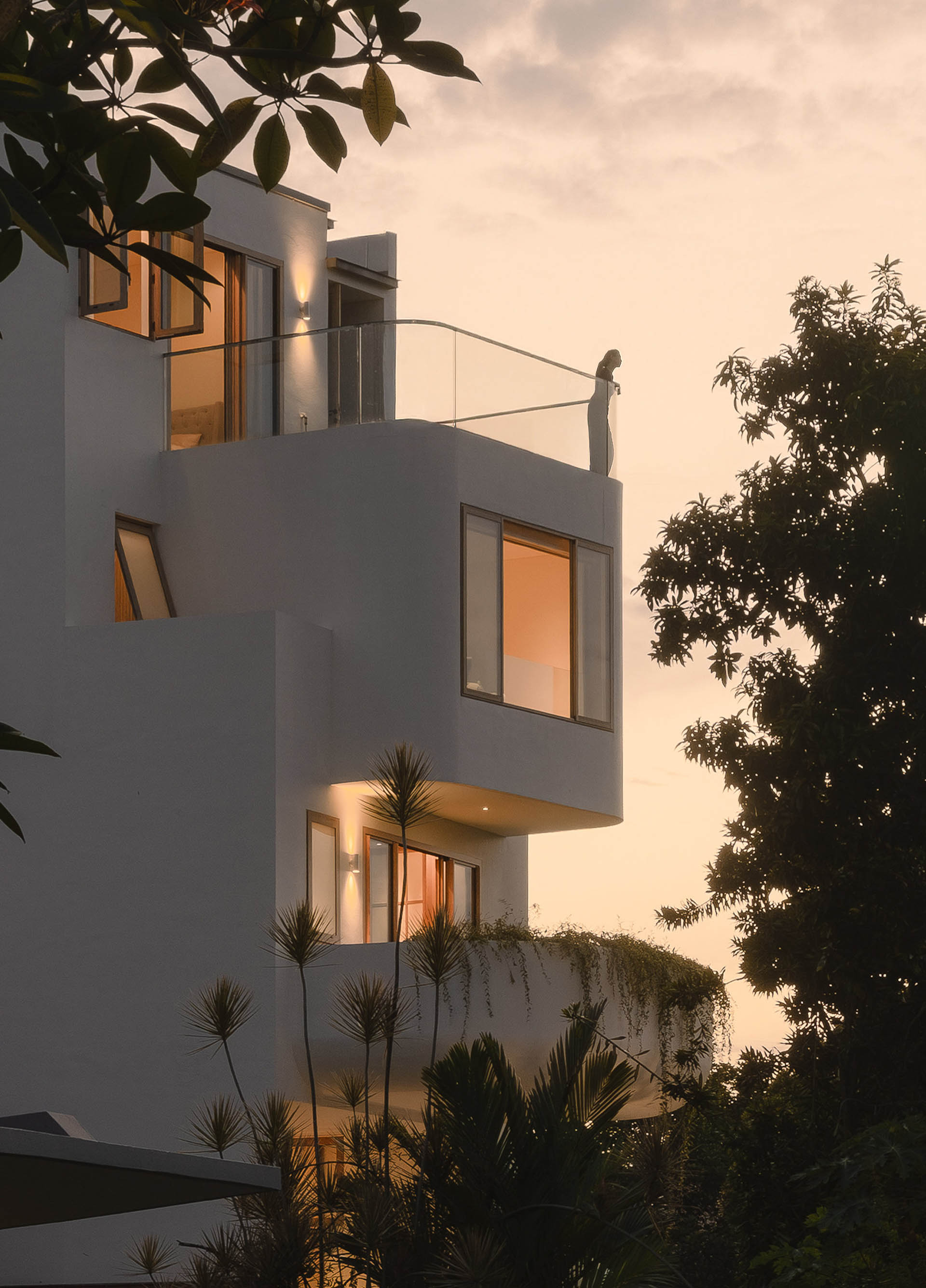
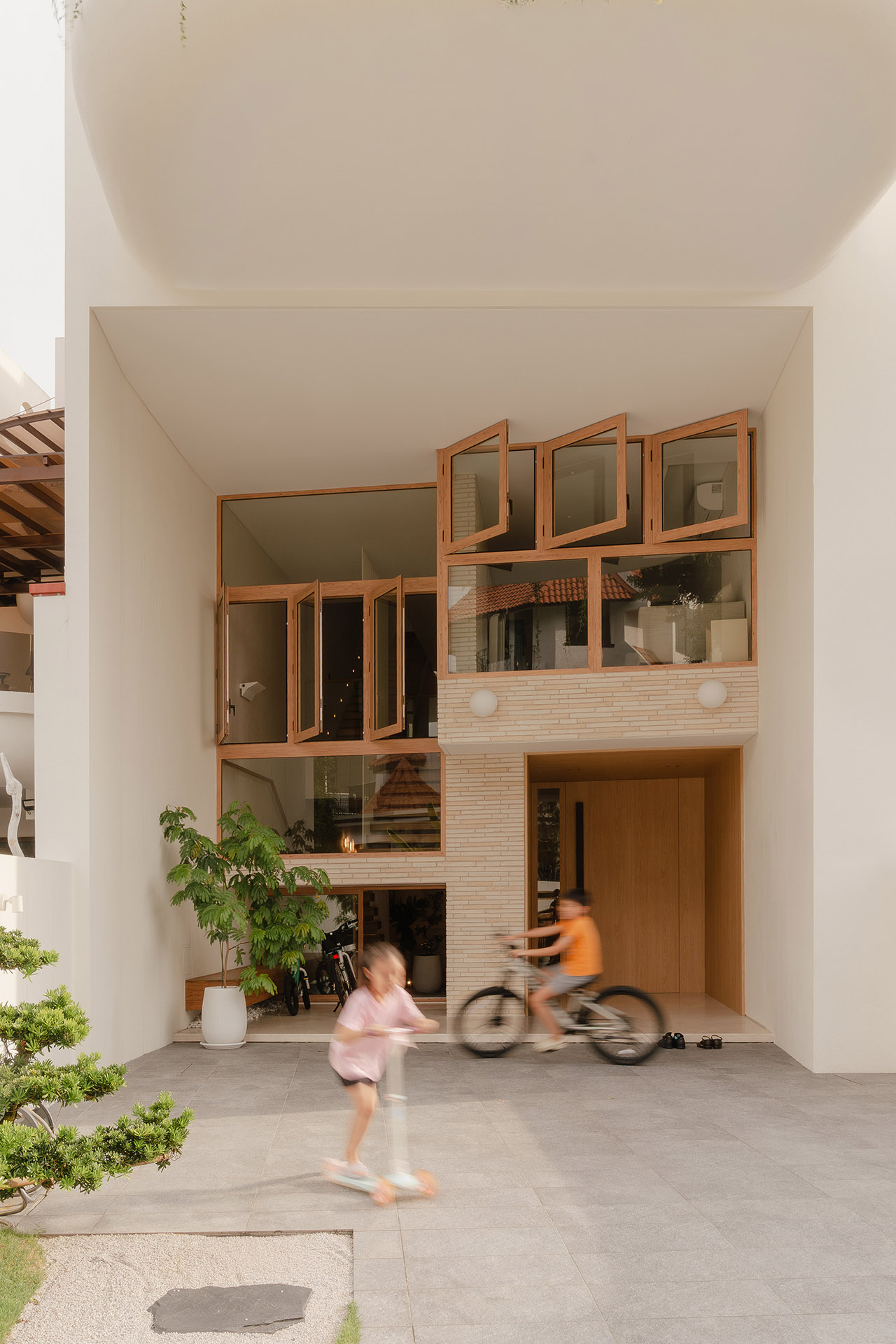
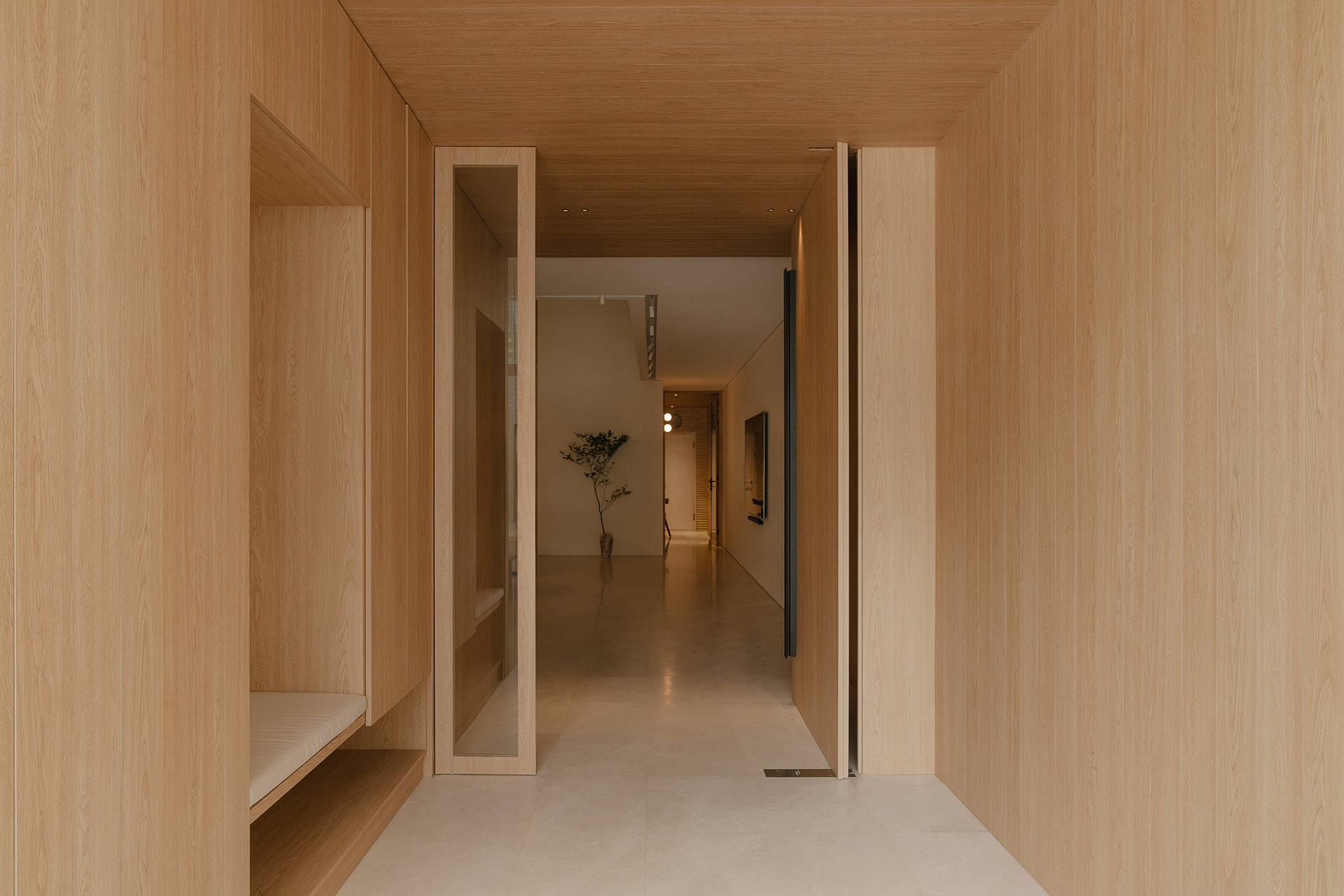
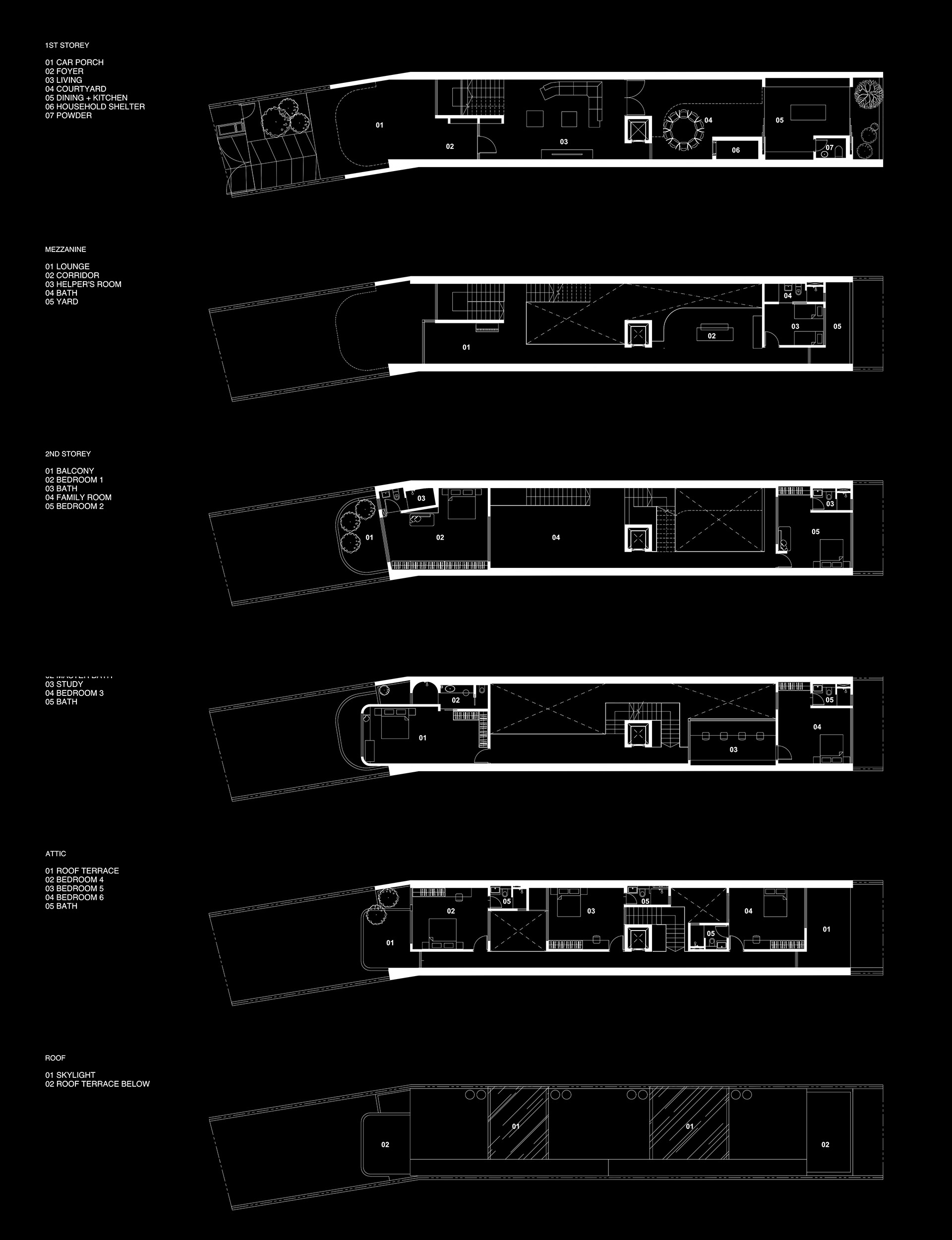
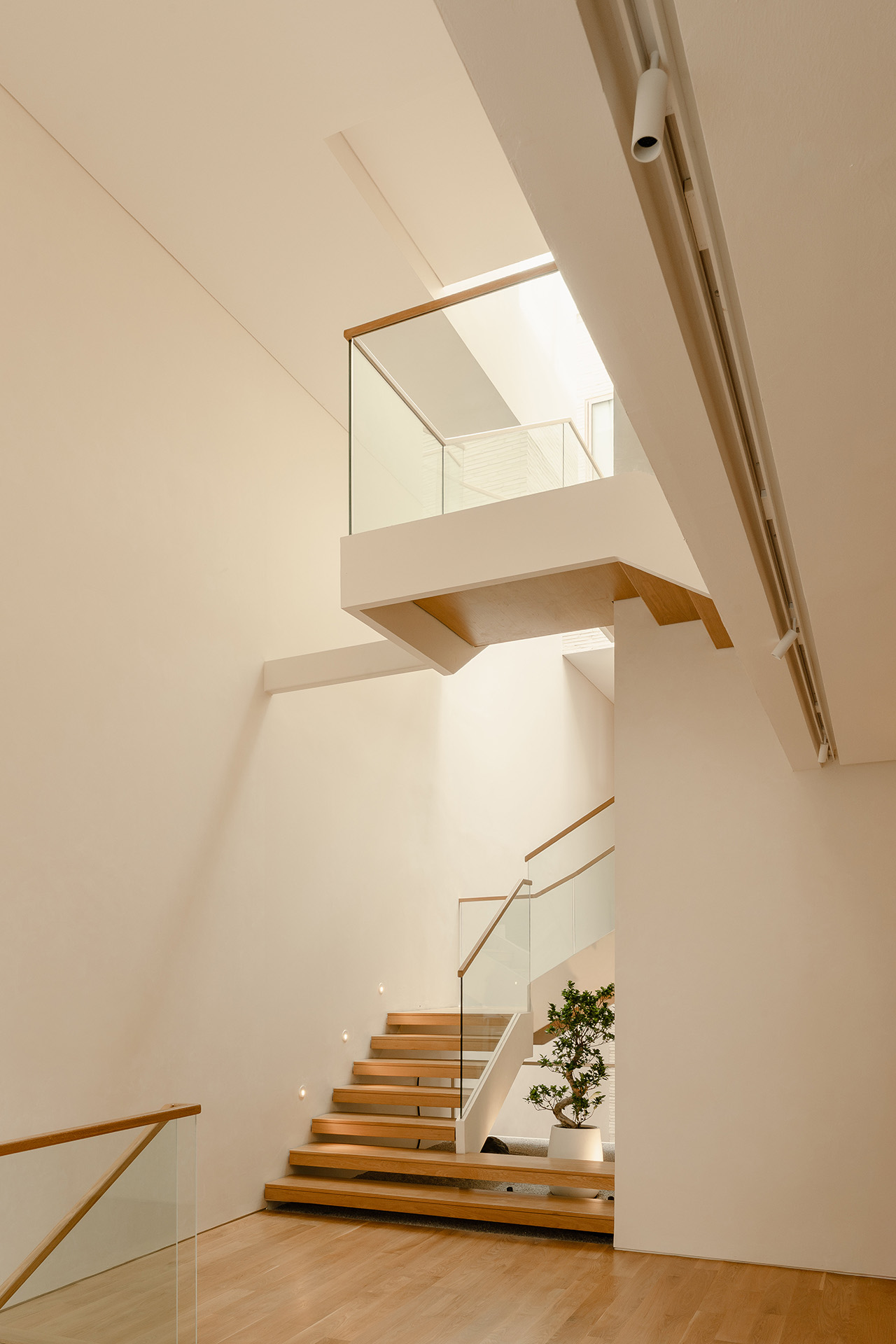
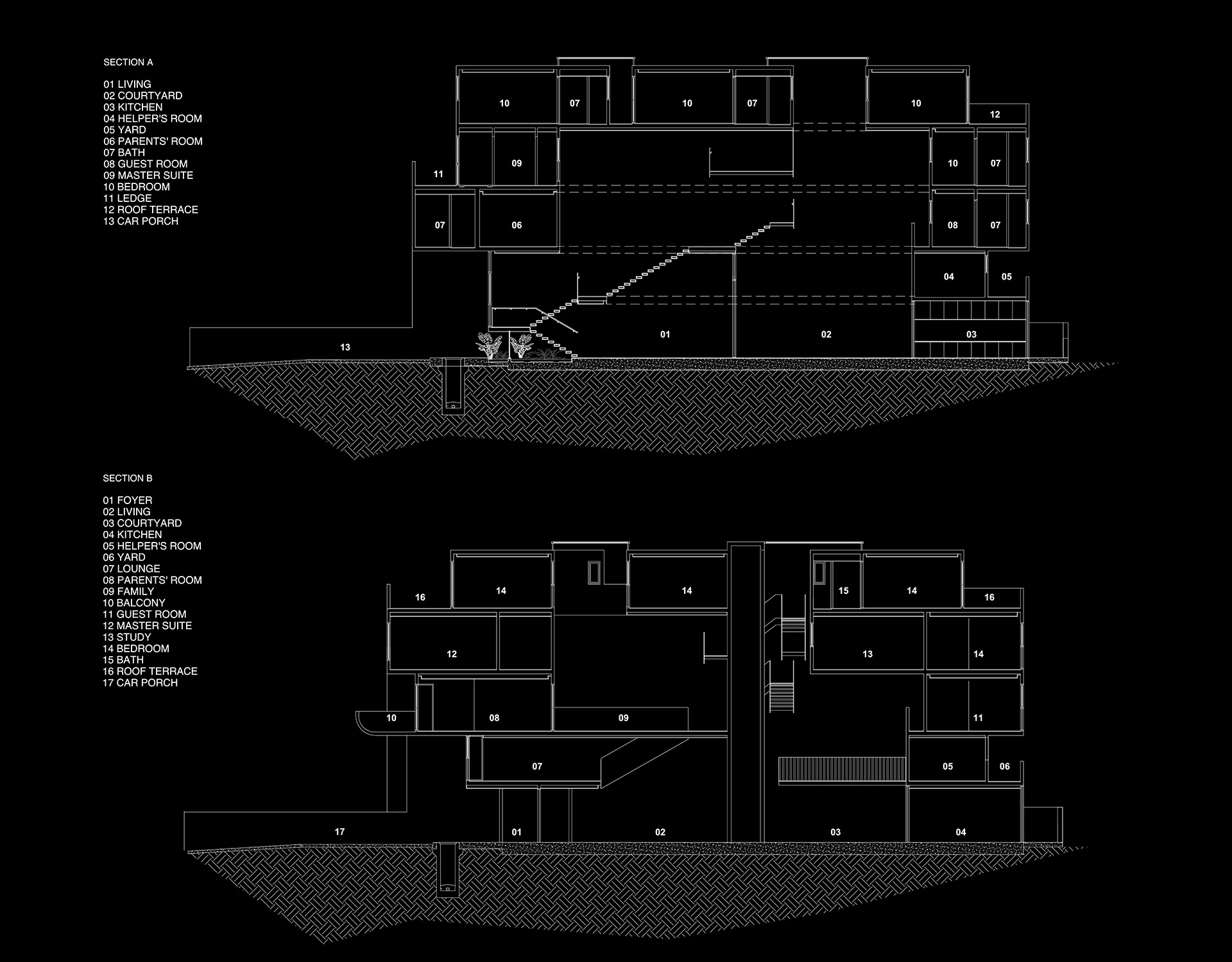
A long intermediate terrace house designed for a multi-generational family unfolds vertically across five floor plates on a narrow urban site measuring just 6 metres wide and more than five times as long. The project addresses the dual challenge of accommodating a large household—comprising a couple, their parents, four children, a live-in helper, and occasional guests—while ensuring that every space enjoys ample natural light and a strong sense of connection.
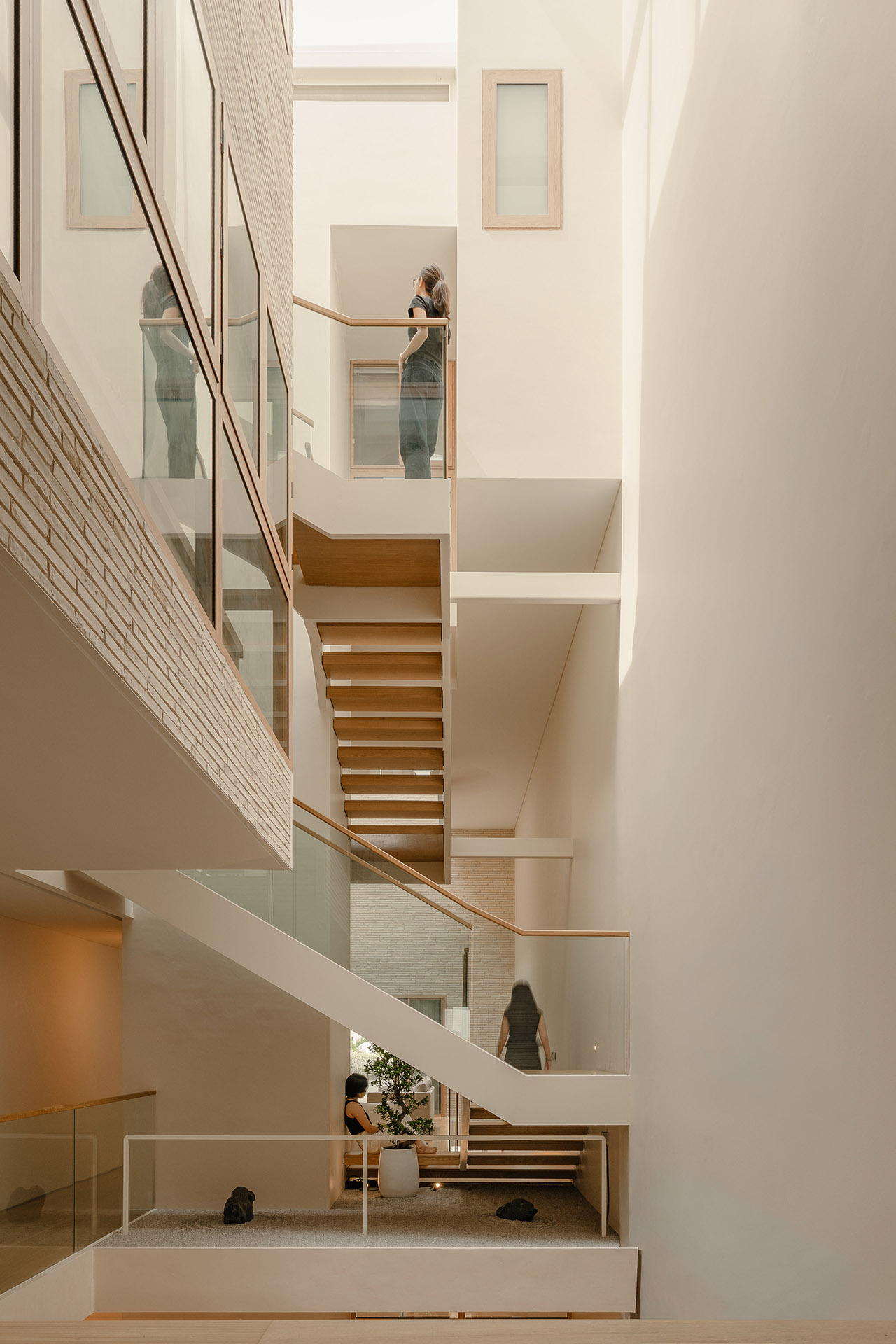
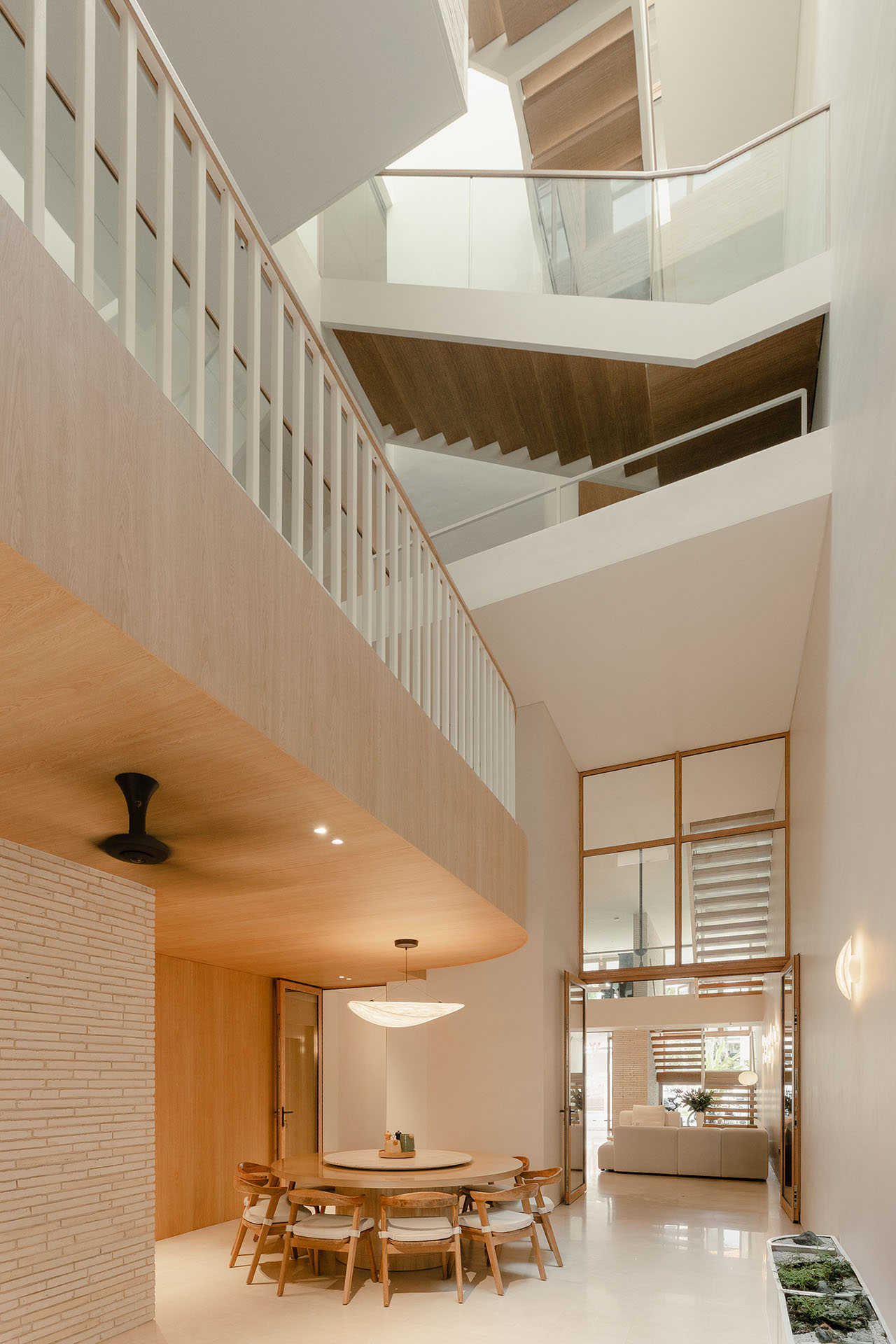
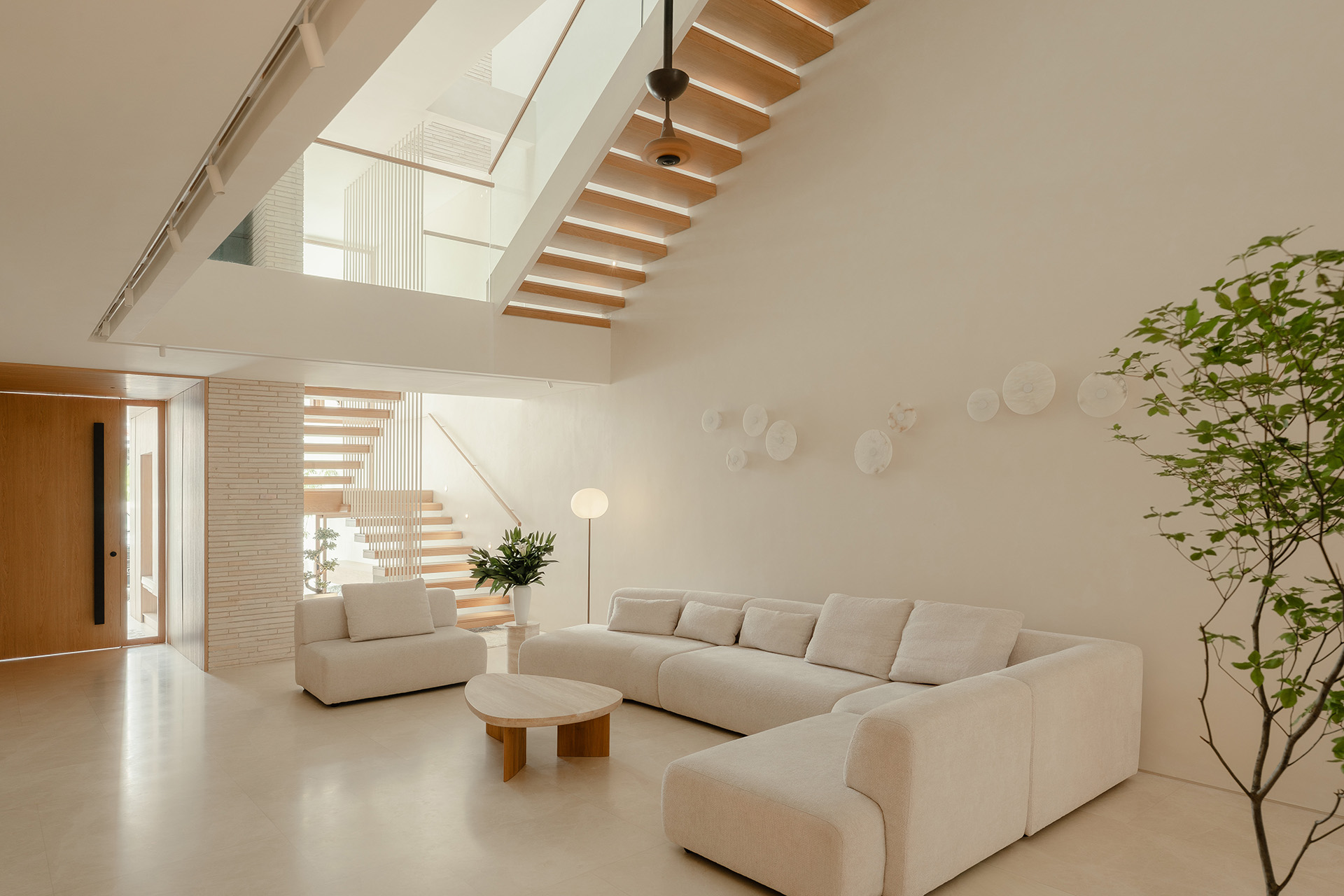
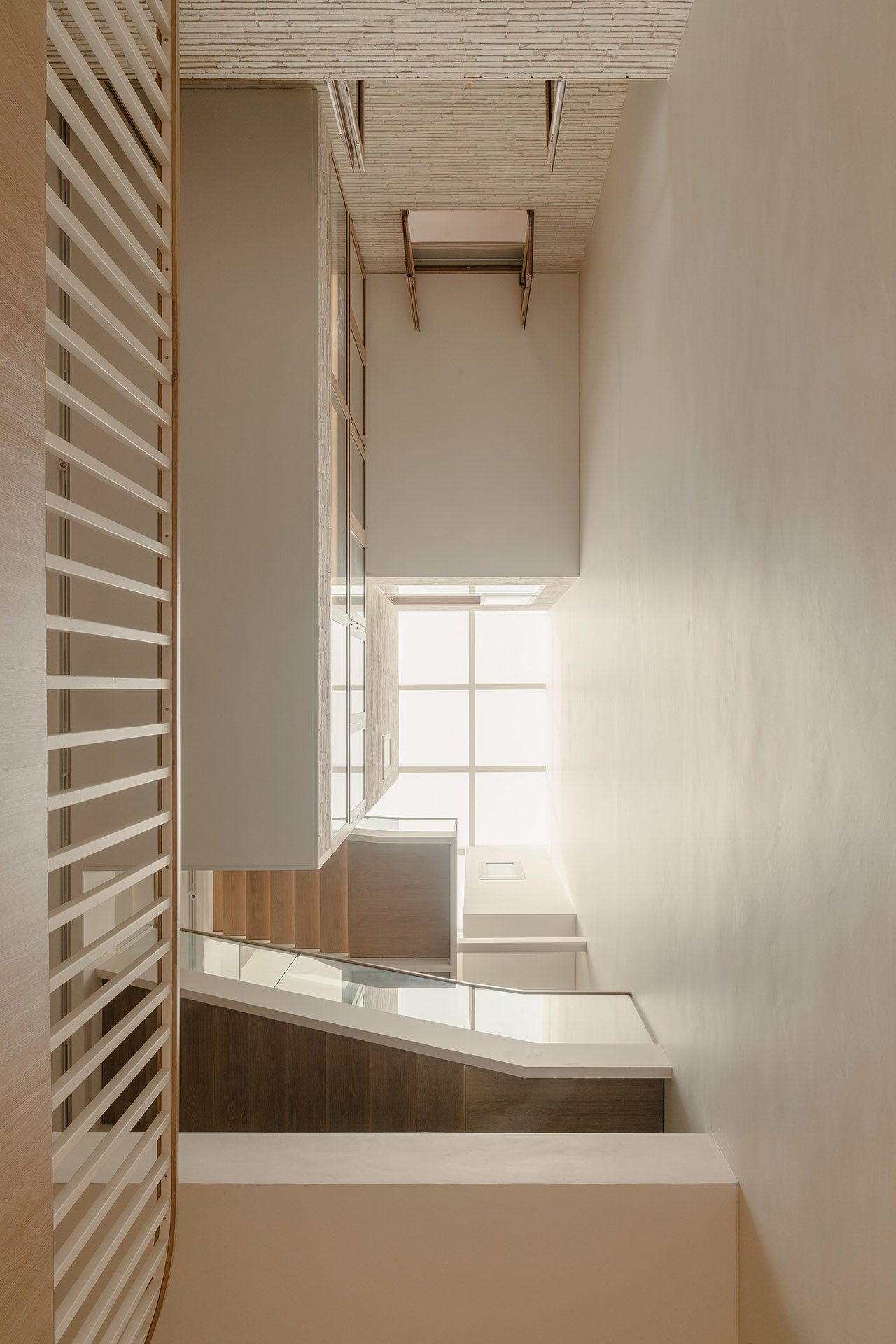
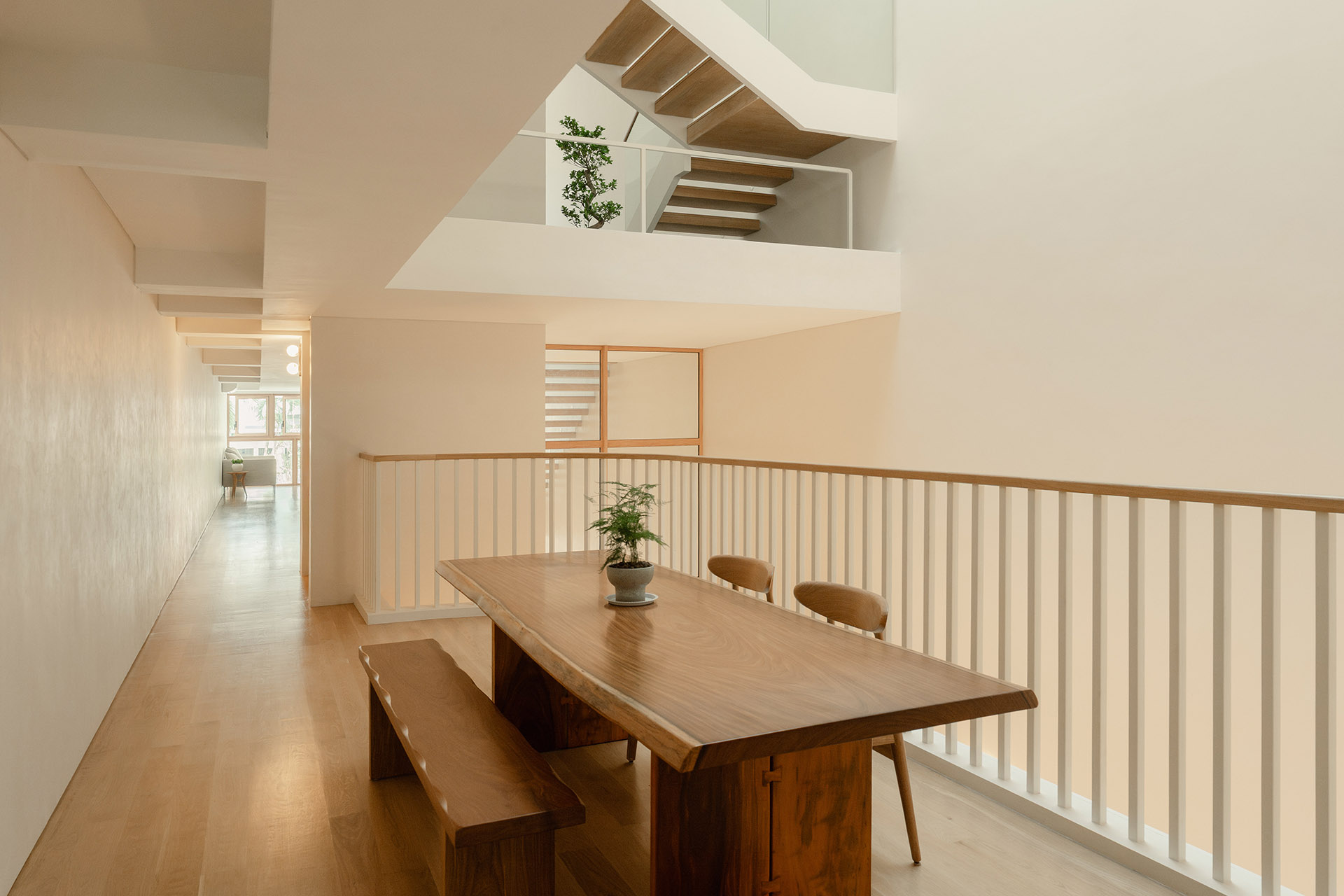
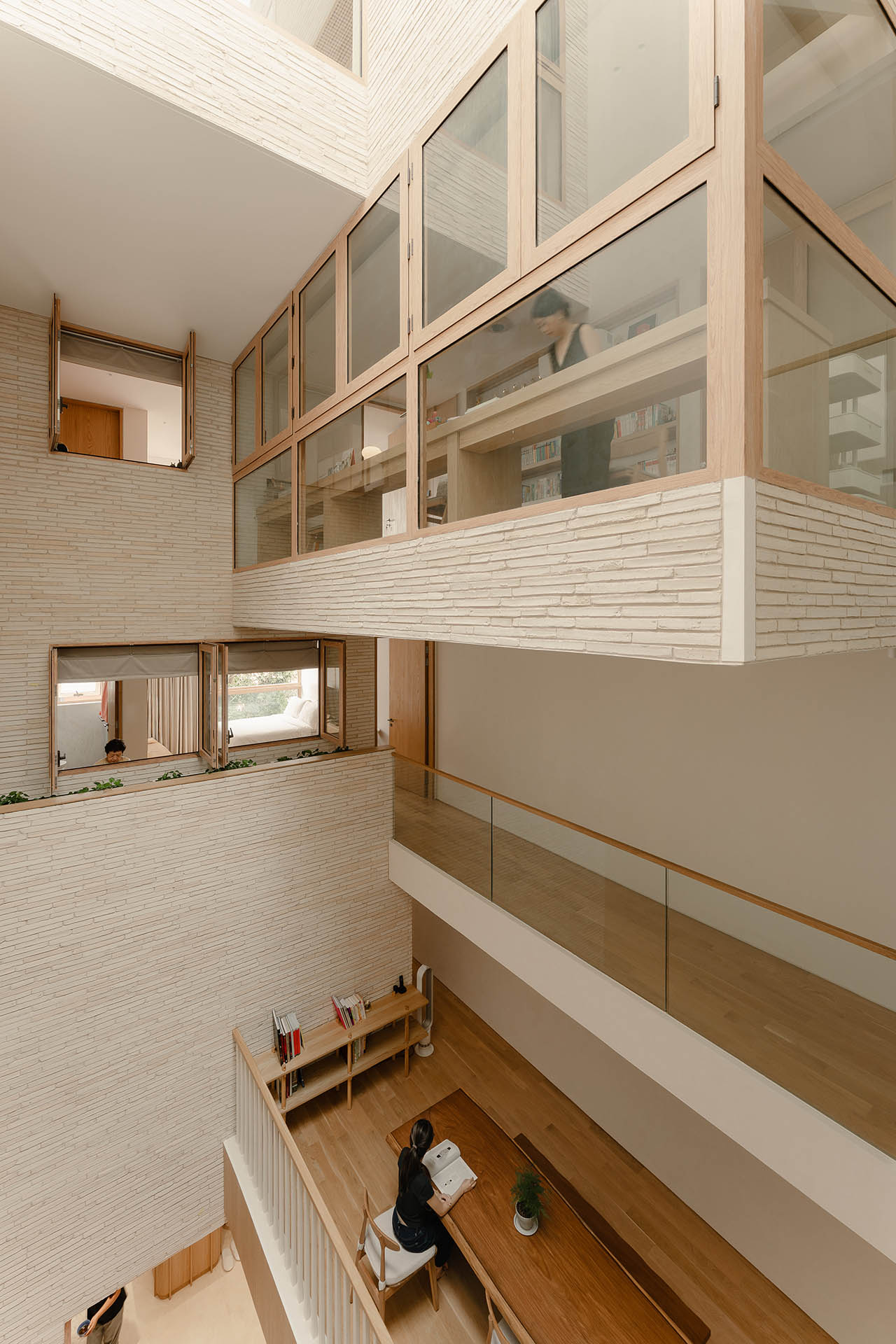
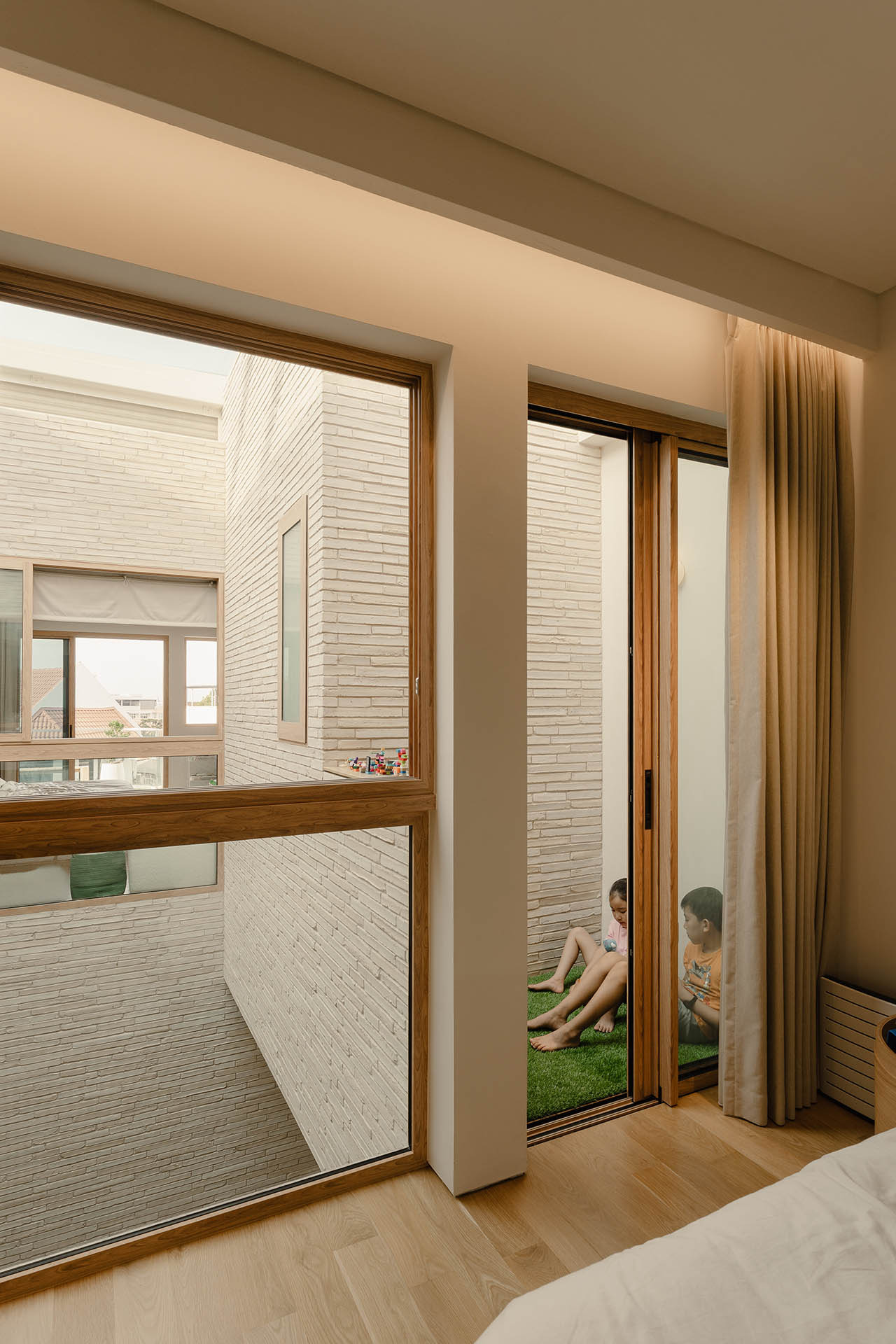
The architectural response centers on carving out a continuous vertical void that spans all five levels. This void becomes the spatial anchor of the home, drawing daylight deep into the plan and providing clear visual orientation throughout. Living spaces and bedrooms are arranged to overlook this central volume, allowing light, air, and movement to flow freely across floors while reinforcing a sense of togetherness within the household.
Given the tight envelope controls and the depth of the site, mezzanine floors are introduced and floor- to-floor heights are carefully calibrated to increase usable area without sacrificing comfort. This approach enables the required number of rooms to be efficiently accommodated within the narrow footprint. Each room is conceived as a distinct box suspended between the party walls and positioned around the void to maximize access to daylight and views across the interior.
The architectural response centers on carving out a continuous vertical void that spans all five levels. This void becomes the spatial anchor of the home, drawing daylight deep into the plan and providing clear visual orientation throughout. Living spaces and bedrooms are arranged to overlook this central volume, allowing light, air, and movement to flow freely across floors while reinforcing a sense of togetherness within the household.
Given the tight envelope controls and the depth of the site, mezzanine floors are introduced and floor- to-floor heights are carefully calibrated to increase usable area without sacrificing comfort. This approach enables the required number of rooms to be efficiently accommodated within the narrow footprint. Each room is conceived as a distinct box suspended between the party walls and positioned around the void to maximize access to daylight and views across the interior.
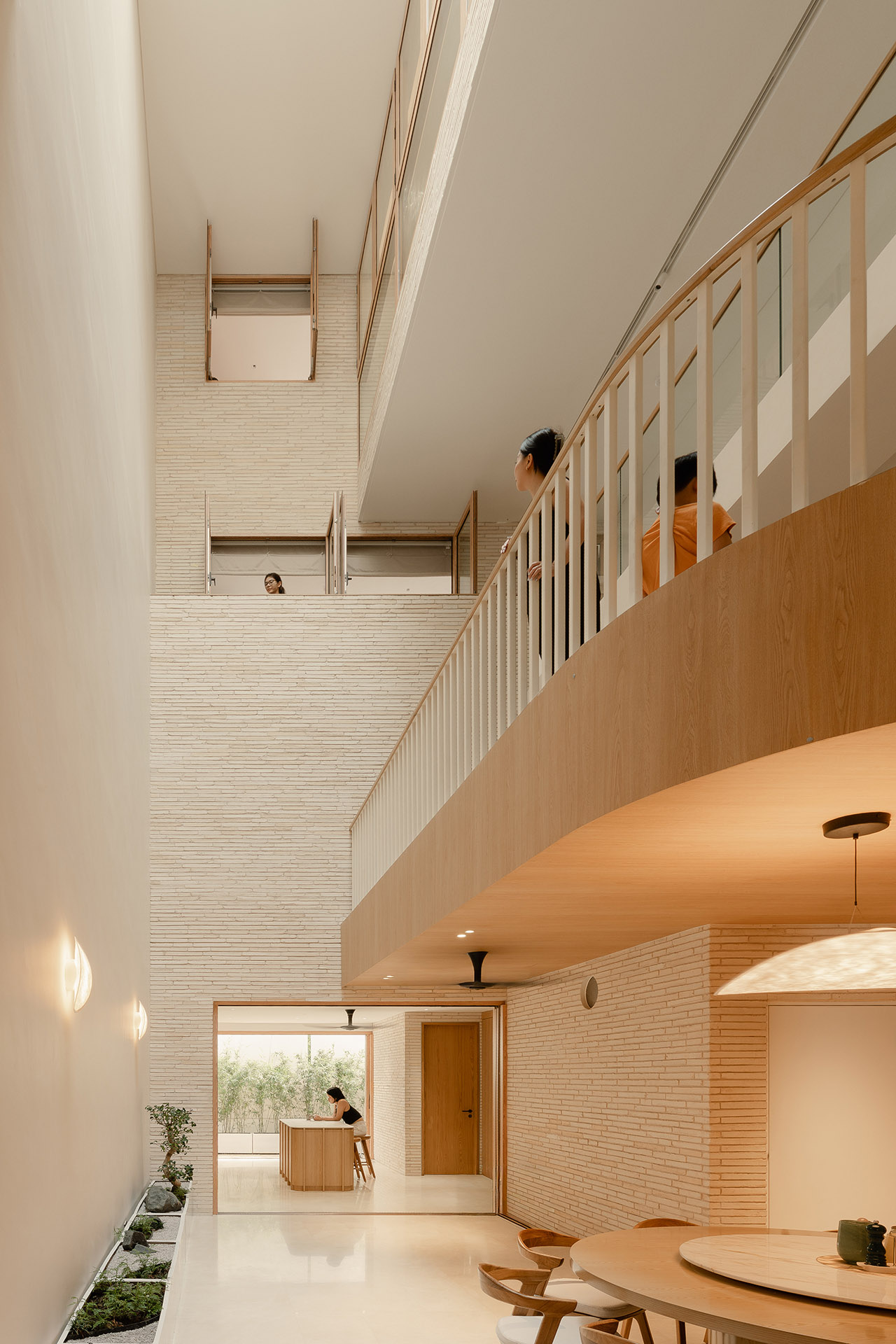
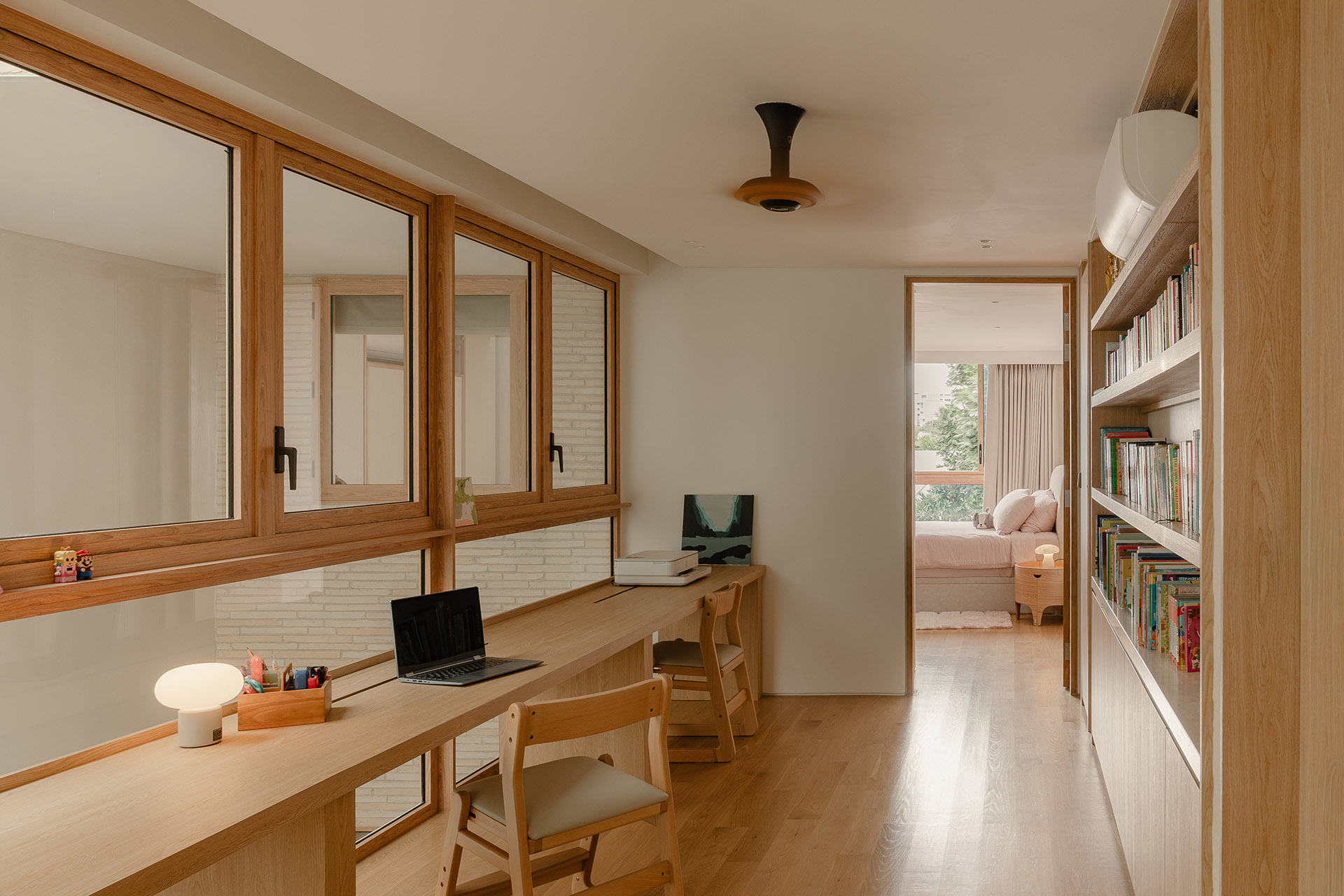
Circulation is treated as a social experience rather than a purely functional one. Bridges, open platforms, and stairwells stitch the rooms together, creating moments of overlap and encounter as family members move through the house. These in-between spaces double as informal areas for play, study, or conversation, supporting daily interaction across generations.
The home is intentionally designed as a nurturing environment for children, where curiosity and relationships can flourish. Visual connections across levels encourage communication and awareness, while layered spaces invite exploration and shared activities without rigid boundaries between living, learning, and play.
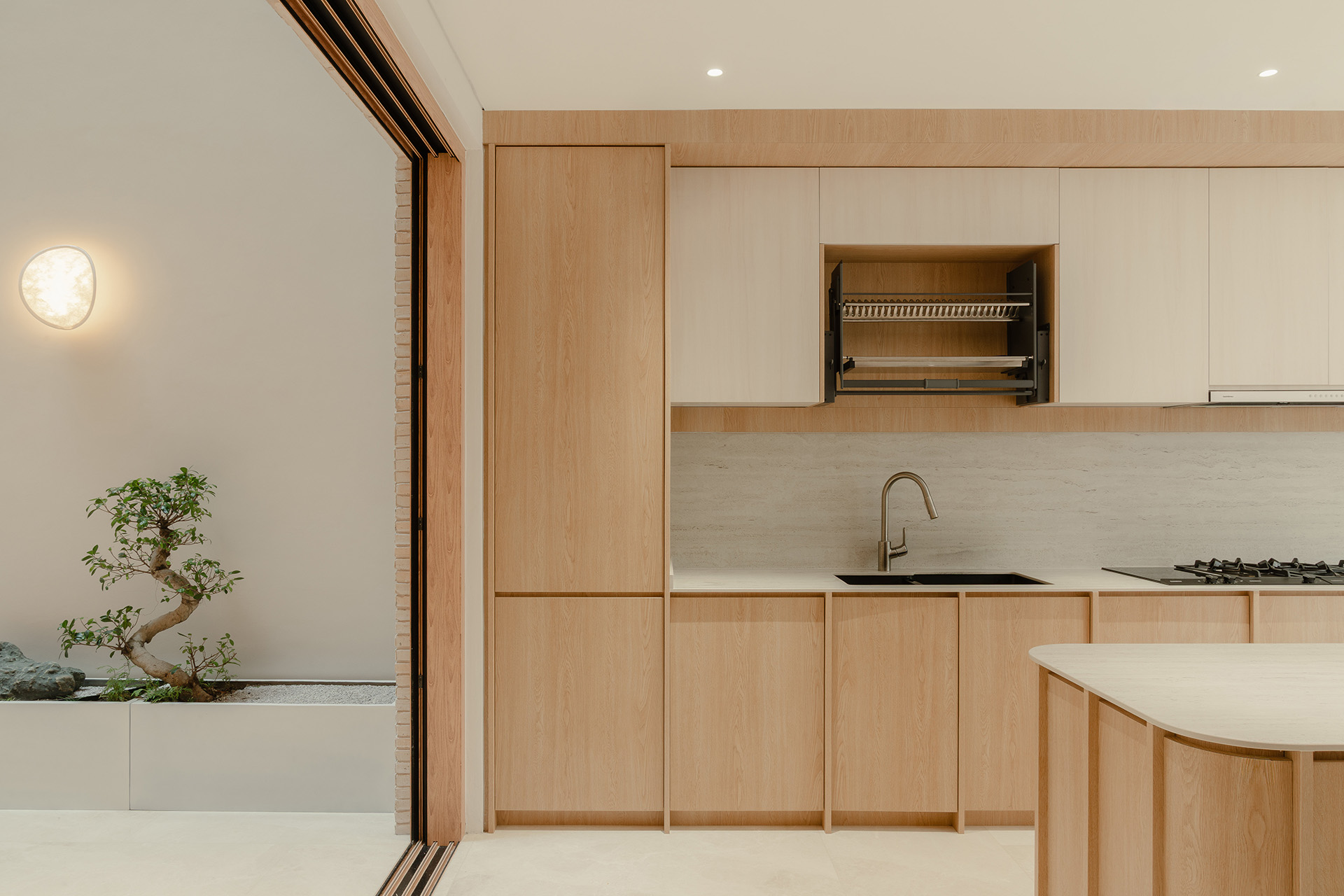
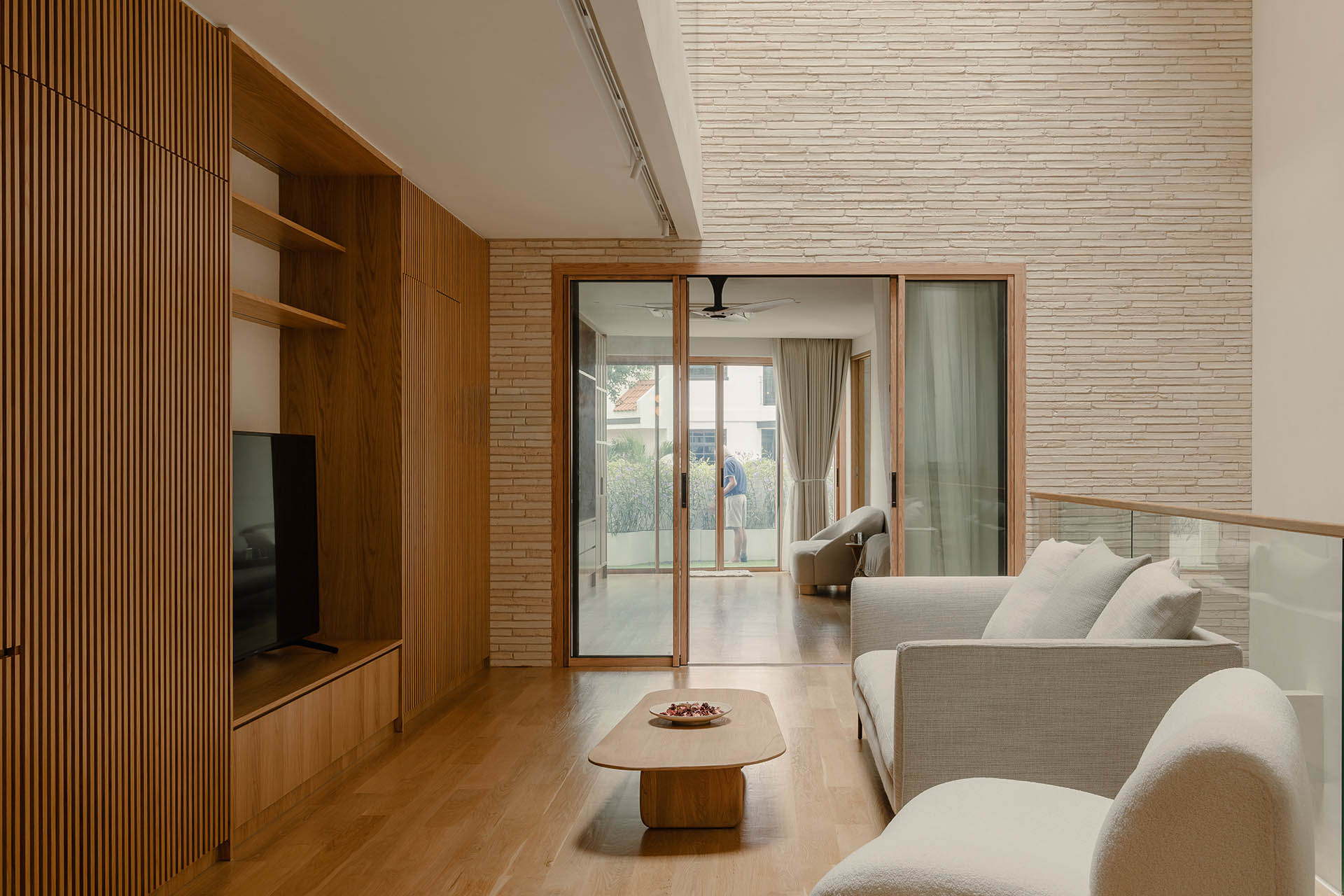
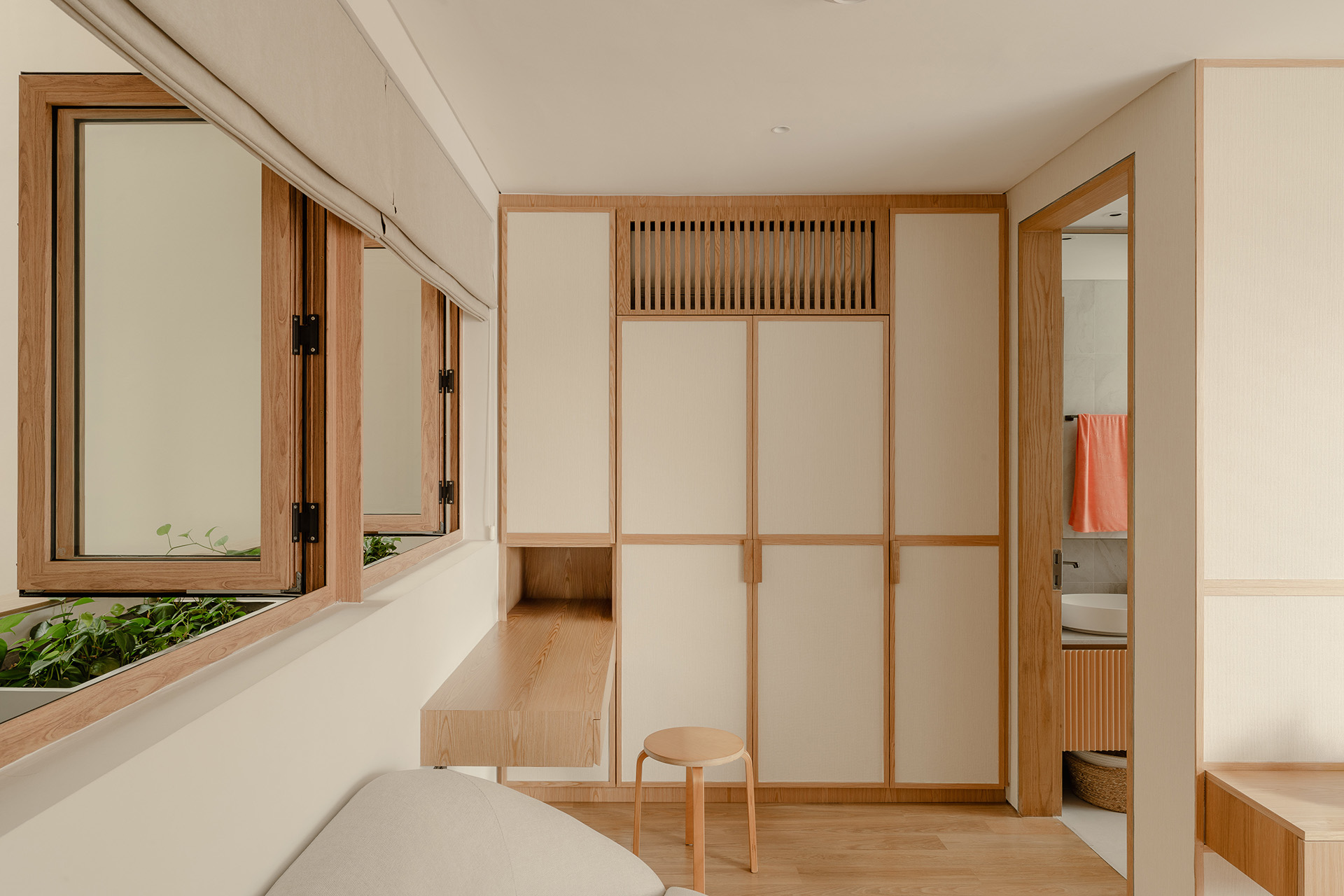
A warm, natural material palette reinforces the domestic character of the interior. Brick-facing tiles clad the walls of the room-boxes, giving each the appearance of a small house with its own windows. Together, they form an indoor village overlooking the central void, lending the common spaces a tactile, outdoor-like quality. This material strategy enhances warmth, familiarity, and human scale, transforming the vertical interior into the emotional heart of the home.
The home is intentionally designed as a nurturing environment for children, where curiosity and relationships can flourish. Visual connections across levels encourage communication and awareness, while layered spaces invite exploration and shared activities without rigid boundaries between living, learning, and play.
A warm, natural material palette reinforces the domestic character of the interior. Brick-facing tiles clad the walls of the room-boxes, giving each the appearance of a small house with its own windows. Together, they form an indoor village overlooking the central void, lending the common spaces a tactile, outdoor-like quality. This material strategy enhances warmth, familiarity, and human scale, transforming the vertical interior into the emotional heart of the home.
LOCATION
10 GLASGOW ROAD, SINGAPORE
YEAR
Completed 2025
DISCIPLINE
ARCHITECTURE & INTERIOR
TYPOLOGY
HOUSE/HOUSING
SIZE (SQM)
700 sqm
TEAM
Tiah Nan Chyuan, Nowelle Tan, Soomin Jung, Lum Kar Man
COLLABORATORS
Photographer: Chan Hao Ong